‘Everyone’s House’: Brenna Hobson on opening up Sydney Opera House
From children’s festivals to poetry slams, Brenna Hobson is broadening the programme at Sydney Opera House and finding new ways to welcome audiences. Its Director of Programming discusses access, education and the business of keeping a national landmark open to everyone.
People do not always arrive at Sydney Opera House intending to see a show. They come to photograph its sail-shaped, white-tiled roof shells, walk beside the harbour or meet friends for a drink. Brenna Hobson wants more of them to stay for a performance.
Wild Things, the Opera House’s first international children’s festival, ran from 26 September to 11 October 2026. Visitors could choose between free performances on the forecourt, creative play in the foyers and ticketed shows inside. Advance sales for the paid performances had been slow. Once the festival began, Hobson says, the organisation was selling 300-700 tickets a day. Families watching the free performances were buying tickets for shows inside.
Hobson says, ‘It’s an invitation to audiences to become an audience when maybe they weren’t even planning on being an audience that day.’
The Opera House calls its strategy Everyone’s House. For Hobson’s programming team, that means asking which Sydney audiences it has yet to attract.
Who is the programme for?
Hobson and her six art-form heads programme about 40% of the work on the Opera House’s stages. Its eight resident companies – Opera Australia, Sydney Symphony Orchestra, the Australian Ballet, Sydney Philharmonic Choirs, Sydney Theatre Company, Bell Shakespeare, Bangarra Dance Theatre and the Australian Chamber Orchestra – account for another 40%, with commercial and community hires making up the remainder.
‘Who are we speaking to and who aren’t we?’ is a recurring question. The team looks across resident-company programmes and commercial bookings to identify missing art forms and audiences it has yet to reach.
The venue’s founding act covers the performing arts, education, innovation and civic occasions. Hobson enjoys its reference to the ‘Terpsichorean arts’: dance, named after the Greek muse Terpsichore.
That broad remit gives Hobson’s team considerable freedom, reflected in a programme that includes the Shanghai Symphony Orchestra, Madness and The Choir of Man. ‘There isn’t an art form or a genre that isn’t appropriate to be at the Opera House, but we want them to be the best.’
Getting through the door
Hobson loves opera, but recognises that its associations with elitism can make some people feel the Opera House is not for them. The name may intimidate first-time visitors who do not know how much else is performed there.
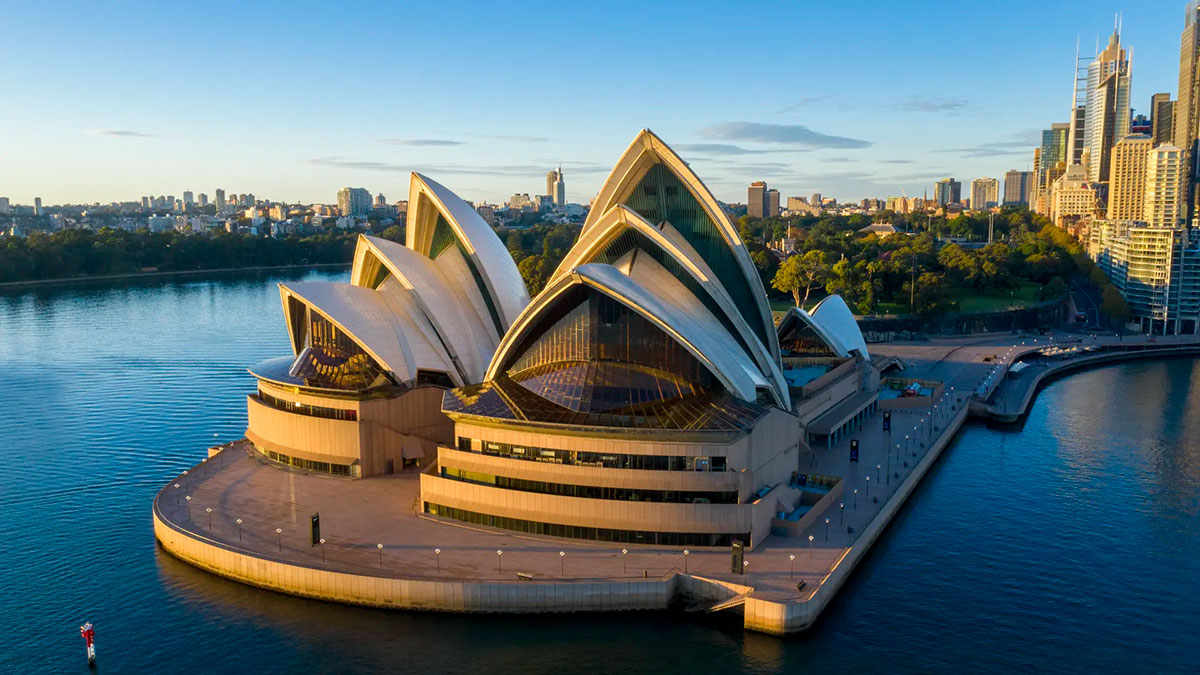
The building itself can reinforce that impression. Visitors cross a vast, exposed forecourt towards an imposing structure without necessarily being able to see where to enter. For people unaccustomed to attending performances, even finding their way inside can be a barrier.
Free performances on the forecourt offer an easier introduction. People can stop and watch without buying a ticket or entering the building, and discover something they might want to see more of.
The Bankstown Poetry Slam brings another audience into the Concert Hall. Its Grand Slam attracts around 2,000 people, Hobson says, many of them young and from Western Sydney. Poets who have been competing at regular local events perform in the Opera House’s largest auditorium.
Street dance offers another way to reach younger audiences. Hobson’s team works with Australian companies and brings in artists from elsewhere in the region, including Taiwan.
Her confidence in attracting audiences extends across the performing arts. She rejects the prediction that audiences are ageing and will not be replaced: ‘I’m not part of the school that thinks that everyone’s dying out and it’s all going to be a disaster.’
The Opera House has in-built advantages, she acknowledges. Tourists come to see the iconic building, and the resident companies bring established audiences. The team can afford to take some programming risks alongside shows it expects to sell well.
Education beyond Sydney
The Opera House’s arts access programme helps schools pay for tickets and transport. Donations cover subsidies for schools that could not otherwise afford to bring their pupils. Children and families programming is also planned with school visits in mind. Productions presented during holidays may begin or finish in term time, allowing the same work to reach both audiences. Pupils attend performances and workshops, some of which use the building’s architecture and history as teaching material.
Online programmes reach schools unable to visit Sydney. Hobson says the Indigenous Literacy Day programme reaches between 250,000 and 350,000 students in a single day. Teachers can also use recorded performances, streamed events and on-demand educational resources. The online material is available to teachers outside Australia too.
Paying for Everyone’s House
Making the Opera House accessible depends on a business model that many visitors may not recognise. Although it operates on a not-for-profit basis, Hobson says it generates between 85% and 90% of its own operating income.
Of its total annual income of A$200 million, A$40 million comes from box-office sales, with food and drink, venue hire and guided tours providing further income. Around 12 million people visit the precinct each year, including approximately 1.5 million attending performances and half a million taking guided tours.
Philanthropy and commercial partnerships bring in approximately A$10 million a year, helping to fund free forecourt performances, the children’s festival, school access and traineeships.
Finding the right partnership
For Hobson, a commercial partnership begins with understanding what a company wants to achieve.
Depending on the company’s aims, the organisation may suggest different ways to involve audiences. At Wild Things, Apple supported activities in the Centre for Creativity, where children and their families used its tablets to make their own work. Hobson says the company was less interested in branding than in what participants could do with the technology.
Keeping the building working
The income must also help sustain a building whose waterfront setting creates some unusual maintenance demands. Hobson describes an unexpected problem with its seawater cooling system. As the harbour has become cleaner, oysters and mussels have returned in greater numbers. Pumps that once needed cleaning every six months now need it every six weeks, she says. A planned closed-loop freshwater system will reduce corrosion and the maintenance associated with seawater exposure.
Elsewhere, saltwater exposure has damaged reinforced concrete on the northern broadwalk, while the Drama Theatre’s stage machinery is due for replacement.
Hobson sees these repairs as part of the continuing work of caring for the building, rather than evidence that it is nearing the end of its useful life.
A regional circuit
International touring is another part of Hobson’s remit. She is in regular contact with other performing arts centres, often developing opportunities through ongoing conversations rather than formal partnerships.
She talks frequently to Esplanade in Singapore about sharing orchestral visits from Europe or North America. An ensemble coming to Australia may be able to perform elsewhere in Asia on the same tour.
At the Association of Asia Pacific Performing Arts Centres 2026 conference in Hong Kong, Hobson was struck by the range of work in the pitch programme: she says she wanted to buy every show. Some productions could reach Sydney within six months; others might take two years.
‘Every time I come to either an international festival or a conference, I come away with a whole lot of energy and a whole lot of ideas about what I want to programme next.’
A future for people in a room
Alongside bringing productions to Sydney, the Opera House helps train the people who work behind the scenes. It employs around 1,100 people, including casual staff in technical, front-of-house and box-office roles. Employees of its resident companies are additional to that figure.
Hobson’s programming team has recently hosted a trainee producer, and exchanges between arts centres offer further opportunities to learn.
Hobson sees limits to the work that artificial intelligence can take over in a live venue. Technology can save labour, but equipment still has to be moved through the building, and a sophisticated lighting desk still needs someone to decide what it should do.
‘One of the things I love about the performing arts is that it is delightfully analogue,’ she says.
Looking ahead, Hobson wants to put on more forecourt performances and bring back open days. Much of the building remains unseen even by people who buy tickets. Open days would let visitors explore it, perhaps for the first time.
People are entitled to decide that the performing arts are not for them, she says. She wants them to feel welcome enough to find out. ‘If you feel like you haven’t been given permission, that’s when I think we’ve got some work to do.’
Brenna Hobson
Brenna Hobson is Director of Programming at Sydney Opera House. She previously led the National Theatre of Scotland as Executive Director from 2017 to 2024, and was Executive Director and co-Chief Executive of Belvoir, the Sydney based theatre company.
Her earlier roles included General Manager of Jigsaw Theatre, a children’s theatre company in Canberra, and Production Manager at Bangarra Dance Theatre. She began her career at Belvoir in 1994 as an Assistant Stage Manager and later became Head of Production. She also served on the Sydney Opera House Trust from 2014 to 2017.