Beyond survival: funding the future of live performance
At the opening sessions of the 2026 Association of Asia Pacific Performing Arts Centres' conference in Hong Kong, performing arts leaders discussed funding new productions, attracting audiences and helping artists earn a living.
Rising costs, changing audiences and funding pressures dominated the opening discussions at this year’s conference of the Association of Asia Pacific Performing Arts Centres (AAPPAC) in Hong Kong. The regional network brings together theatre and concert-hall operators and other organisations that commission, present and support live performance.
Hosted for the first time by WestK, Hong Kong’s waterfront cultural district, the conference runs from 6 to 9 October under the theme ‘The Next Act: Shaping the Future’. It brings together more than 350 performing arts leaders, cultural practitioners and artists from nearly 70 cities for the association’s 30th anniversary.
Following TS Crew’s opening performance of No Dragon No Lion on 7 October, welcome addresses, a keynote interview and the first panel examined the prospects for venues and artists.
Betty Fung, chief executive of the West Kowloon Cultural District Authority, described WestK’s strategy of bringing international productions to Hong Kong while taking locally created work abroad. Its Performing Arts Centre, due to open in 2027, will provide further opportunities for collaboration.
Taking artistic risks
Hong Kong composer and musical director Leon Ko began the keynote interview by questioning the conference’s premise: could anyone really shape the future? He had returned to Hong Kong from New York without anticipating the career that followed. Some doors, he suggested, open despite the plans made for them.
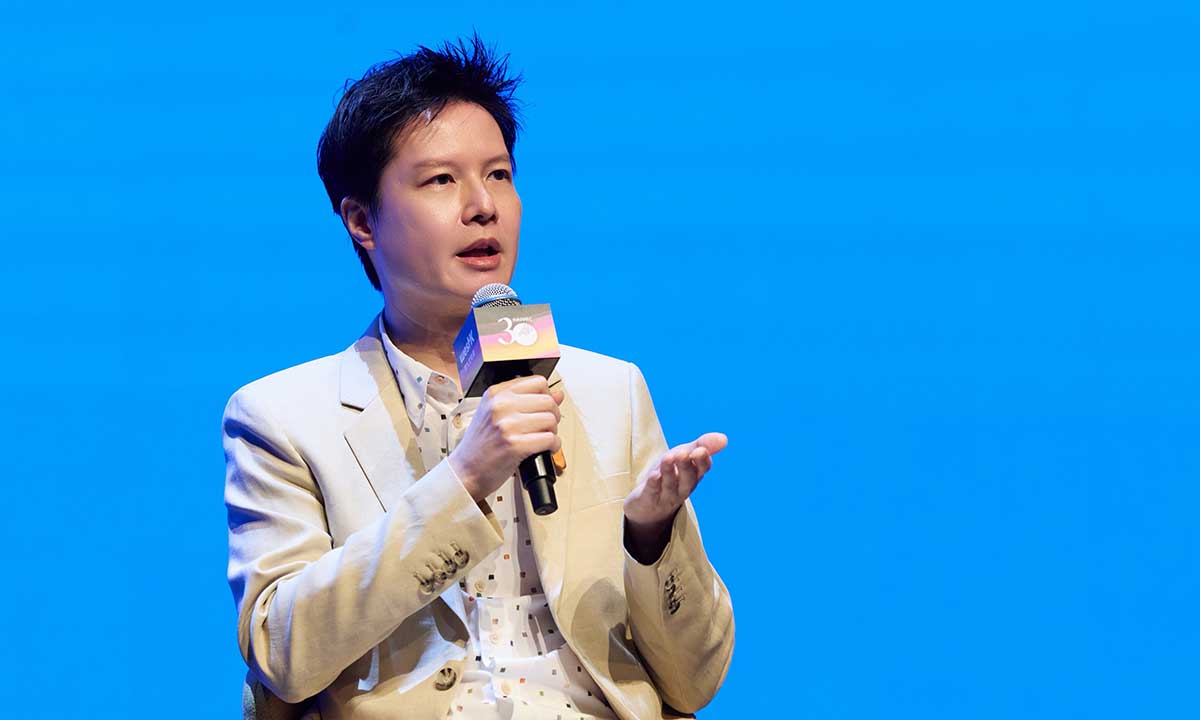
His musical The Impossible Trial illustrated the time and uncertainty involved in creating work. Development began in 2015 and extended across a decade. During the pandemic, the team continued rehearsing and recorded an album. Ko had doubted whether audiences would respond to its intricate plot and music. Its enthusiastic reception in Hong Kong, Shanghai and Beijing surprised him. The mainland performances retained the original Cantonese.
He distinguished between making something new and making something fresh. Familiar elements could be combined in unexpected ways; character and story guided his composing.
Ko also cautioned against treating audience data as instructions for future work. Positive online responses did not necessarily become ticket sales elsewhere. He particularly valued 'honest' direct conversations with audience members.
Ko said, ‘We have references, but they’re only references.’ He ended by asking delegates to retain something mysterious in their lives that would keep them curious.
Funding venues and artists
The conference’s first panel, ‘From Survival to Strategy’, followed. Moderated by Fung, it considered economic and funding pressures from four markedly different perspectives.
Nguyen Bich Tra, founder of Vietnam’s The Run – A Theatre Project, described an initiative with no permanent venue, fixed programme or paid staff. Its founder was its sole, unpaid worker.
Growth in the cultural economy did not necessarily provide opportunities for experimental theatre. Tra questioned why individual practitioners should be expected to pursue an institution’s ambition of ever larger audiences. Sustaining artists’ practices and relationships also provided infrastructure for future work.
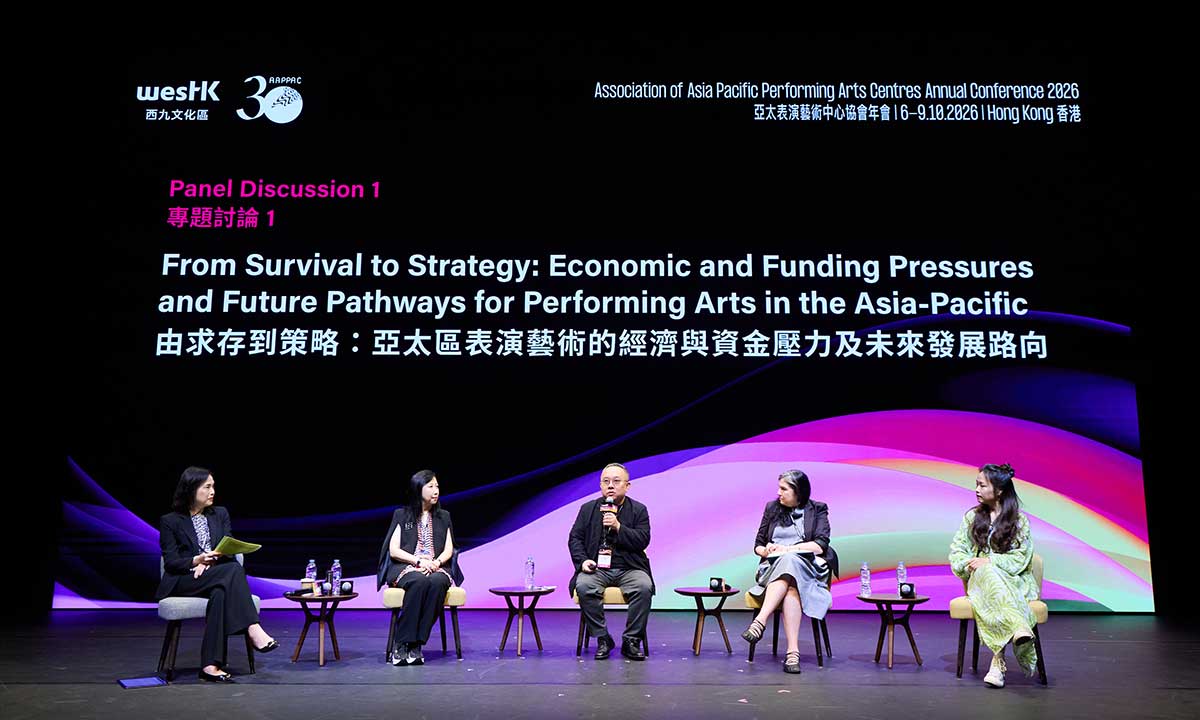
Brenna Hobson, director of programming at Sydney Opera House, put annual turnover at around A$140 million, with only 10–15% of income coming from government. Her team generated roughly A$40 million in box-office income last year. Hospitality operators returned about A$20 million to the Opera House; building tours, taken by half a million people annually, brought in another A$20 million.
Hobson estimated that 90% of visitors to the site took a photograph and left. Free forecourt performances and installations were encouraging more inside, helping generate 300-700 daily ticket purchases for indoor performances during the current children’s festival. Audience data also helped her team recommend shows and assess its reach across Sydney.
Ding Zhongyuan, deputy director-general of Shenzhen’s Bureau of Culture, Radio, Television, Tourism and Sports, described the work needed to accompany the city’s investment in cultural buildings. Venues needed productions, skilled operators and audiences.
The planned Shenzhen Opera House would include rehearsal facilities, space for resident companies and production storage alongside performance halls and commercial activity. Touring could extend productions’ lives and help performers develop through repeated performances.
Cecilia Ho, president of Hong Kong’s Lee Hysan Foundation, urged arts organisations to identify shared purposes with funders. Work contributing to education, inclusion or well-being could attract support beyond organisations primarily concerned with performance.
The foundation looks for applicants’ discipline, dedication and self-discovery. Ho said, ‘We don’t count numbers. We look at depth.’ For larger projects, she suggested applying to different funders for different areas of cost, rather than expecting one supporter to carry everything.
A question from the floor turned attention to artists’ incomes. Brenna Hobson argued that large institutions had a responsibility to those with the least negotiating power. She recalled her predecessor asking an artist to resubmit a proposed fee with an extra A$10,000 added.
Cecilia Ho said funders wanted to know whether training would help artists earn a living, although exceptional talent sometimes warranted support before its commercial prospects were clear.
Whatever their income or building ambitions, institutions depended on artists being able to afford to make new work. Their funding strategies had to account for that.